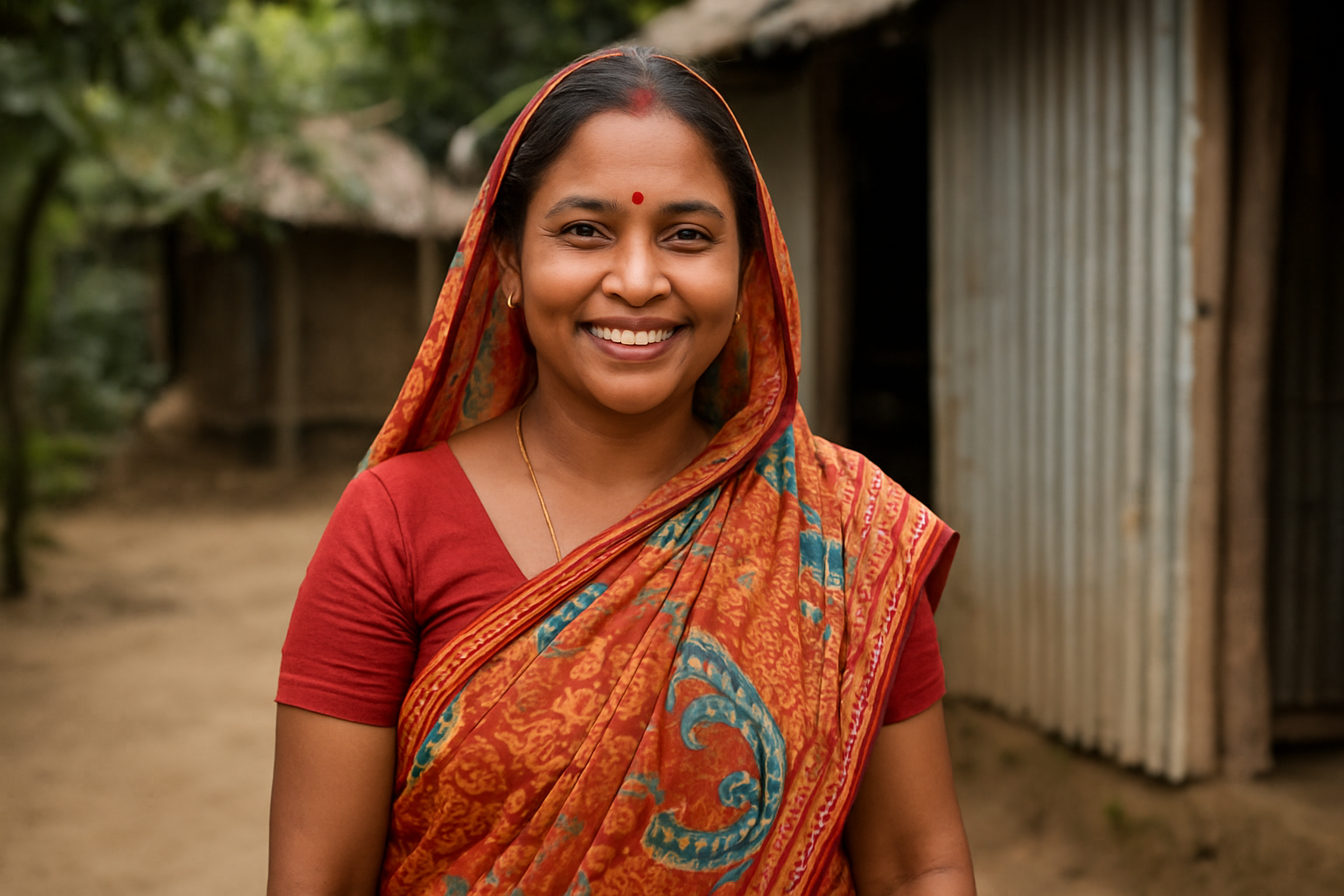
They do not appear in economic bulletins by name. They rarely have a website, and almost never a job title. But the woman stitching until midnight in Tangail, drying spices on a Cumilla rooftop, weaving jute in Rangpur and answering order messages from a Dhaka bedroom is running one of the millions of enterprises that keep Bangladesh’s local economies moving.
This is for them.
What they actually build
Women-led small businesses in Bangladesh cluster in a handful of sectors, each one a genuine industry when you count it properly.
Tailoring, boutique and handloom. From single-machine home units to workshops employing a dozen women. Bangladesh’s traditional weaving traditions survive largely because women kept producing when the market did not reward them.
Handicrafts. Jute, bamboo, cane, terracotta, embroidery. Products with real export potential, still frequently sold at prices that ignore the skill involved.
Food processing. Pickles, spices, snacks, honey, dried and preserved goods. The bridge between what farmers grow and what consumers buy — and one of the fastest-growing spaces for women-led enterprise.
Agro and nursery. Seedlings, ornamental plants, poultry, dairy, fisheries. Enterprises built on a homestead plot that end up supplying a district.
Beauty and personal services. Parlours and home-based services, often the first business a young woman starts because the capital requirement is low and the skill is learnable.
Online retail. A generation running businesses from a phone, reaching customers hundreds of kilometres away that their mothers could never have served.
Why it deserves celebration, not sympathy
There is a habit of describing grassroots women entrepreneurs as beneficiaries. The framing is wrong.
They are employers. Almost every member who grows hires other women — often women with the fewest alternatives.
They are the local supply chain. Village shops, seasonal markets and urban boutiques are stocked by them.
They are credit-worthy customers, not risks. Women’s repayment records in microfinance are consistently strong; the system’s reluctance is structural, not evidential.
They are the reason children stay in school. Income earned by a woman disproportionately goes to education, nutrition and health.
And they are doing it against the current. Women-led enterprises held about 7.28% of outstanding CMSME loans in early 2026, against a mandatory 15% target. Every success in this sector happened with less than half the credit the policy intended.
Five things that would honour them more than a hashtag
1. Buy from them. Not once, on a commemorative day. Regularly, at a fair price, and pay on time. Late payment is the single most damaging thing a large buyer does to a small supplier.
2. Name them. When you share a product photograph, name the maker. Attribution builds a business; anonymity builds a charity image.
3. Commit procurement. If you run a company, allocate a percentage of purchasing to women-led CMSME suppliers and publish the number. Demand outperforms donation, permanently.
4. Bank them properly. If you work in financial services, train branch staff on the women’s refinance products and report gender-disaggregated disbursement. The 7.28% figure is a branch-level problem before it is a policy problem.
5. Share knowledge. Costing, packaging, digital selling, export documentation. A weekend of your expertise can change a member’s margin permanently.
Nominate a woman who deserves recognition
AGWEB is building an ongoing record of the women behind Bangladesh’s grassroots enterprises — for its publications, events and award nominations, including national platforms such as the SME Women Award.
If you know a woman running a small enterprise who deserves to be seen — a member, a neighbour, a supplier, your own mother — send us her story.
How to nominate: email info@agweb.org.bd with her name, district, what she makes, how long she has been in business, and what she has overcome. A photograph helps.
To the women reading this
If you are running a small business in Bangladesh right now, from a room in your house, around everything else you are responsible for: what you are doing is an enterprise, and it is economically significant whether or not anyone has told you so.
There is training available. There is credit designed for you specifically. There is a network of women who have already faced the wall you are standing in front of.
Come and use it: Become a Member · Activities · Shop · Contact