
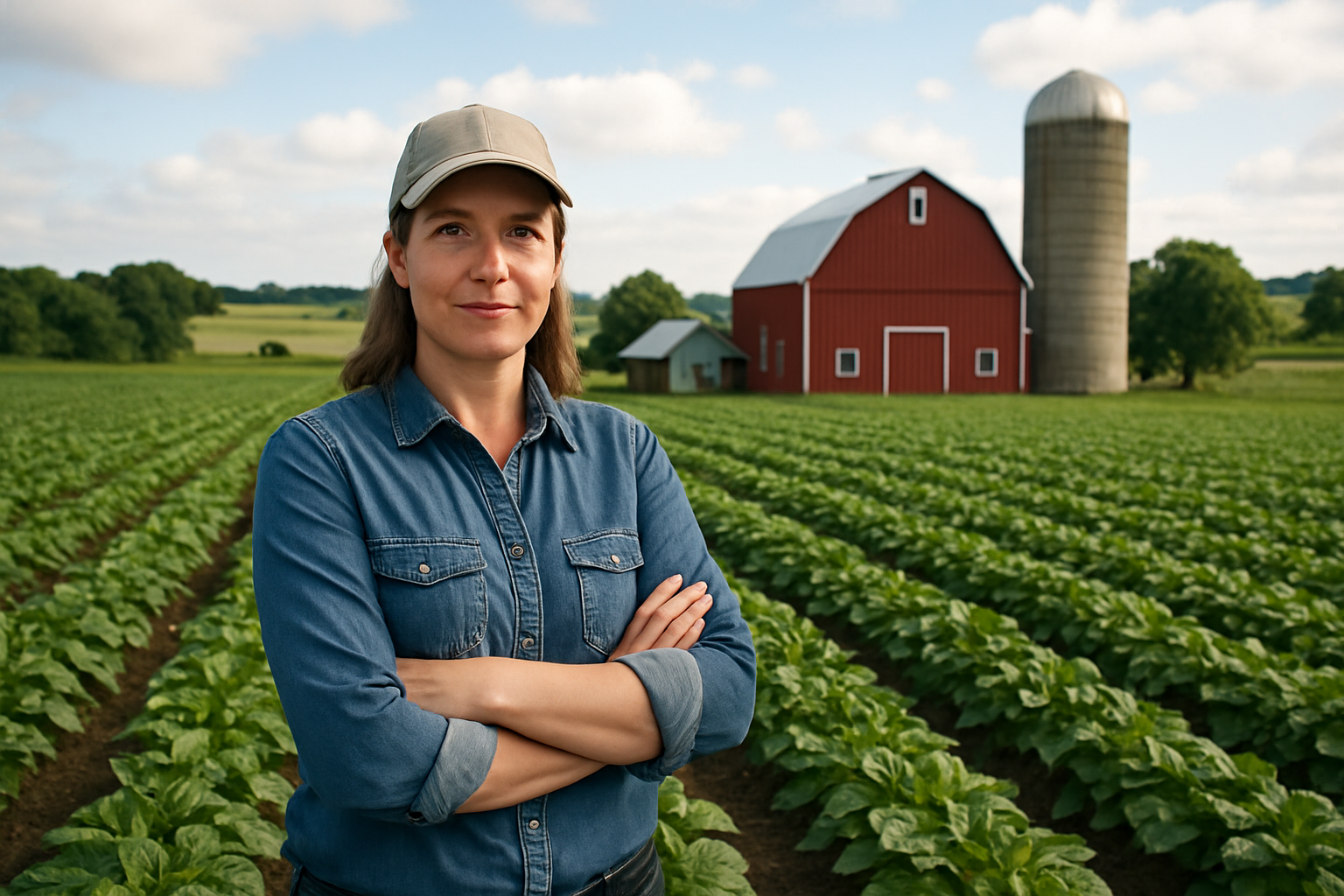
Rural economic development in Bangladesh has often been framed as a transfer problem: move money, inputs or projects from the centre to the periphery. The more durable version works the other way round — build enterprises in the periphery that generate their own income, employ locally, and keep value where it is created.
Women-led grassroots enterprise is the most under-used instrument for doing that, and it is where AGWEB concentrates its work.
Why rural enterprise is the foundation
Rural enterprises hold roughly 24% of total CMSME credit in Bangladesh, and in the first quarter of 2026 banks disbursed about Tk 12,468 crore to more than 115,000 rural enterprises — concentrated in small-scale food processing, handicrafts and agro-commerce.
Those are precisely the sectors where women dominate the workforce and where local raw materials can be turned into higher-value products without leaving the district.
The economics are favourable in three ways. Jobs are created at low capital cost. Income is spent locally, multiplying through village shops, schools and construction. And production is small and diversified enough to adapt when a season, a price or a market moves against it.
Four ways AGWEB builds rural economic capacity
1. Cluster development instead of scattered support
A single producer with a good product has no negotiating power, cannot fill a wholesale order, and pays retail prices for raw materials.
Organising women in the same trade and locality — handloom, jute craft, food processing, tailoring — changes all three. Groups can buy inputs in bulk, share equipment, meet volume orders, and receive training at a fraction of the per-person cost. For buyers, a cluster is a supplier they can actually contract with.
2. Local value addition
The core of rural economic upgrading is simple: stop selling raw and start selling processed.
Selling paddy is different from selling milled and packaged rice. Selling raw jute is different from selling finished bags. Selling fresh produce is different from selling dried, pickled or preserved goods with a label and a shelf life.
Each processing step adds margin that currently leaves the district. AGWEB’s training in costing, quality, packaging and labelling exists to help members capture it.
3. Market bridges out of the district
Value addition is pointless without a buyer. The association works on both ends of that bridge: taking members to the National SME Product Fair and comparable platforms where wholesale buyers are present, running an online shop so members can sell nationally without building their own channel, and teaching digital selling so that geography stops determining price.
4. Sustainable and circular production
Rural enterprise has a natural advantage in resource efficiency, and members are increasingly building on it — composting farm waste, using natural fibres and locally available materials, converting textile and agricultural offcuts into new products, and reducing packaging waste.
This is not only environmental positioning. It lowers input costs, and it aligns members with buyers and export channels that increasingly ask about sourcing and sustainability.
Resilience: what happens when the water rises
Bangladesh’s rural economy is repeatedly tested by floods, cyclones and crop failures. Enterprise resilience is not a theoretical concern here — AGWEB has participated in coordination efforts around humanitarian response for flood-affected communities.
What makes a rural enterprise survive a shock:
- Diversified income so no single product or season carries everything
- Savings and formal credit access rather than dependence on informal lenders at distress rates
- Group structures that allow producers to cover each other’s orders
- Skills that transfer across products, so a member can shift output when demand changes
Each of those is something training and organisation can build in advance.
The migration effect
When a district offers a viable enterprise path, fewer families are pushed toward Dhaka’s informal settlements or into overseas labour contracts on unfavourable terms.
A woman running a nine-person tailoring unit in Tangail is not just earning. She is anchoring nine households in a place where housing, schooling and family support already exist. Rural enterprise policy is, functionally, urban policy.
What sustainable rural development requires next
Push credit outward. Eligibility means nothing without branch-level outreach in district towns. Rural women rarely walk into a bank unprompted.
Fund clusters, not only individuals. The unit of support should match the unit of production.
Simplify formalisation. A single-window process for licence, TIN and BIN would formalise more rural enterprises than any subsidy scheme.
Commit procurement. Corporate and government buyers who commit to sourcing from rural women-led CMSMEs create demand that outlasts any project cycle.
Invest in the boring skills. Costing, quality consistency, packaging and record-keeping determine whether a rural enterprise stays at subsistence or becomes a supplier.
AGWEB’s position
The Association of Grassroots Women Entrepreneurs, Bangladesh works at the junction between national policy and village-level enterprise — training members, organising clusters, opening market channels, and carrying field evidence into consultations with the Ministry of Industries, Ministry of Commerce, SME Foundation, BSCIC and development partners including ADB.
A sustainable rural economy is not built by projects that end. It is built by enterprises that keep operating after everyone has gone home.
Explore: About AGWEB · Activities · Our Partners